BNSF continues commitment to support passenger rail
By SUSAN GREEN
Staff Writer
As a freight railroad, we can move just about anything. But we also help move people by supporting commuter rail.
This continues a tradition that started with our famed predecessor lines many decades ago. Travel patterns have changed, but BNSF still works with commuter rail lines in three locations on our network. Today’s riders mainly choose commuter rail because of convenience and economics, and others prefer it as a sustainable transportation option.
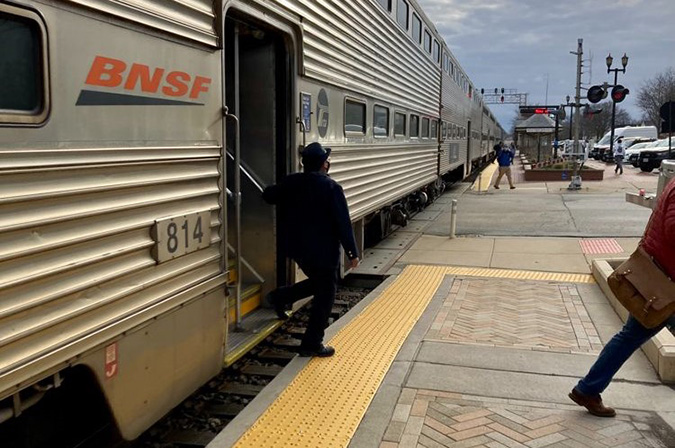
Riders who commute by rail in Chicago had some good news earlier this year when BNSF came to an agreement with public transit agency Metra to extend commuter rail service for another 10 years.
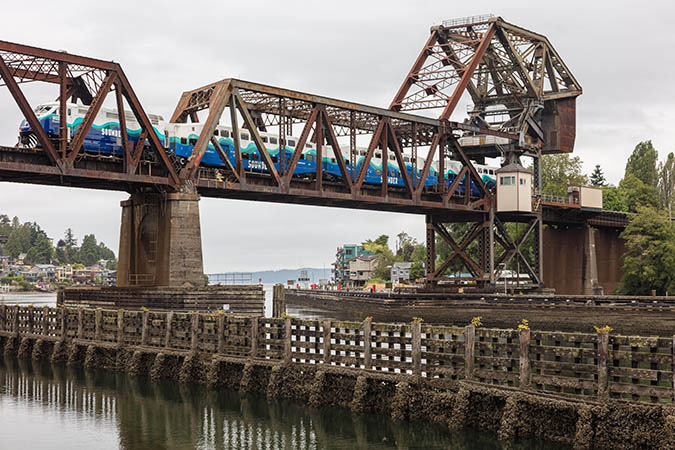
In addition to Metra, BNSF operates suburban train service in Seattle on the Sounder line and in Southern California with Metrolink. These metropolitan areas benefit from taking trains from the suburbs into the city and back, mainly during the work week.
“Like our freight trains that get goods from where they are to where they need to be, rail is a solution for getting people where they need to go,” said Jim Tylick, BNSF’s assistant vice president of passenger operations.
Commuter railroads operate on BNSF lines when they can be constructively shared and won’t negatively affect our freight service.
“BNSF strives to get commuter trains operating across BNSF territory to their destination on time, with a goal of 95% or better,” Tylick said. “It’s one that’s carefully balanced with BNSF’s passenger rail principles. Before any project is considered, a lot of study must be done, including considering future freight and passenger traffic growth.”
Most recently, BNSF and Sounder operated special event trains for the World Cup.
“We appreciate our long-standing relationship with BNSF, including the recent specials we operated and the heightened focus,” said Ed Cobean, deputy CEO of Sound Transit. “Sounder trains are possible though the collaborative relationship between BNSF Railway and Sound Transit as these trains operate across BNSF rails between Tacoma and Everett, Washington.”
For long-distance travel, Amtrak has operated the national passenger railroad since 1971. BNSF, like all major freight railroads, hosts Amtrak passenger trains on our rail.
Back in the day, BNSF predecessors made long-distance travel by rail a special experience and the source of many nostalgic memories.
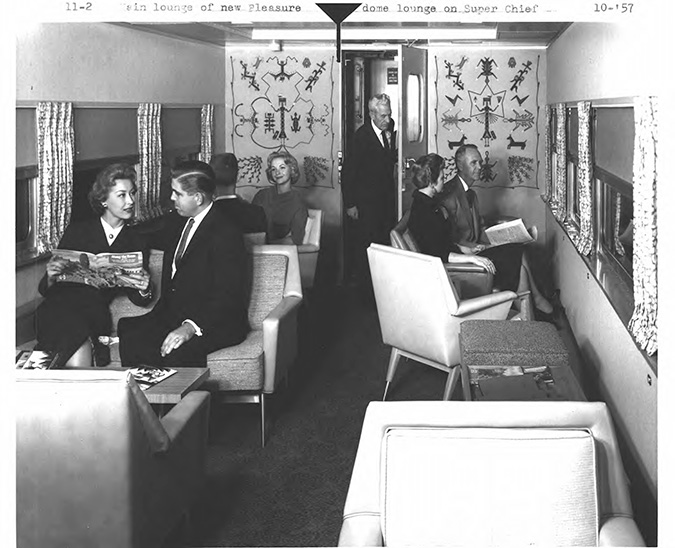
The Chicago, Burlington & Quincy (CB&Q or Burlington Route) was famous for its Zephyr trains. The Santa Fe’s Super Chiefs were known as the “train of the stars.” Great Northern (GN) operated the Empire Builder, its luxury transcontinental train. Northern Pacific had the North Coast Limited, a transcontinental train between Chicago and Seattle.
The “Golden Age” of train travel followed the Civil War. Trains became the best and most-preferred mode of transportation. Politicians and presidents from Ulysses S. Grant to Franklin D. Roosevelt would ride the rails for the next 50 years.
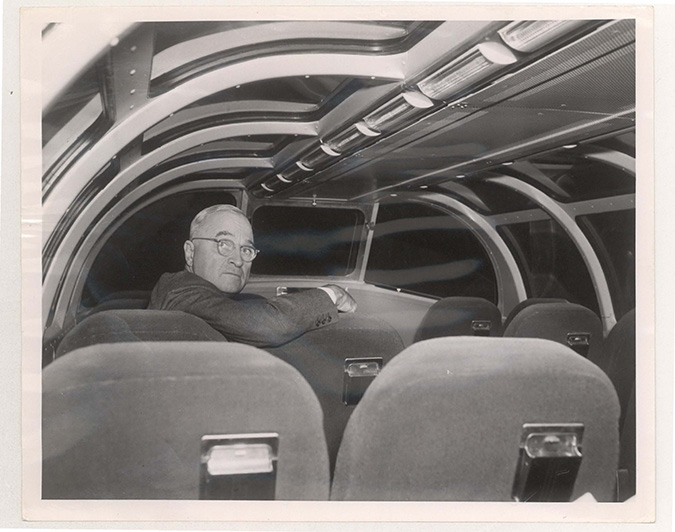
In the 1880s the country had more than 100,000 miles of track; by 1902, that mileage doubled. Passenger trains could reach speeds up to 95 mph. Express trains with fewer stops could travel long distances in significantly shorter time. For example, Santa Fe’s Super Chief took riders from Chicago to Los Angeles in under 40 hours.
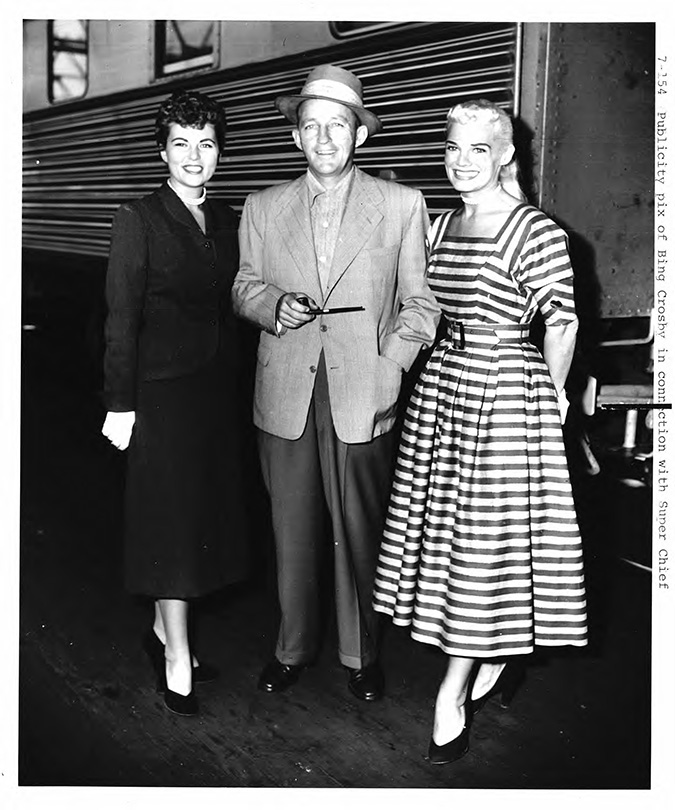
Santa Fe was also known for its celebrity passengers like Shirley Temple, Lucille Ball, Desi Arnaz, Judy Garland and Bing Crosby. The famous riders, like others on board, could enjoy air-conditioned cars, private bedrooms and gourmet meals, among other amenities.
Perhaps the best-known achievement of any BNSF predecessor took place in 1934, shortly after the Burlington Route introduced the Pioneer Zephyr – America’s first diesel-powered, streamlined passenger train. On May 26, 1934, Burlington staged one of the greatest transportation events – a 1,000-mile, record-breaking, 13-hour, non-stop run from Denver to the World’s Fair in Chicago.
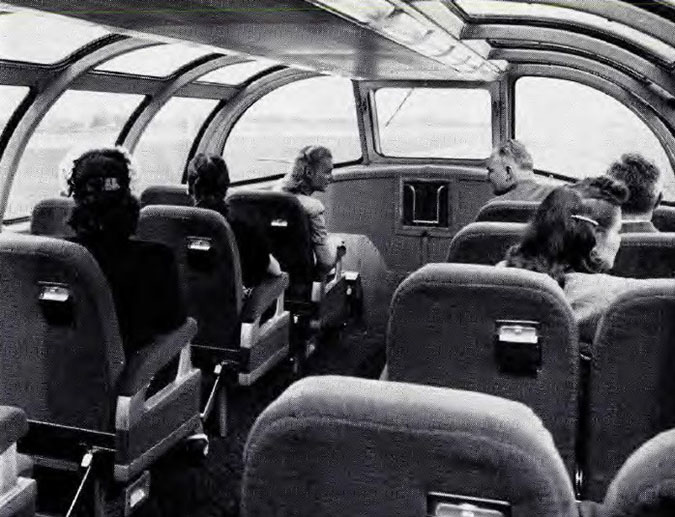
In 1945, the Burlington Route created America’s first vista-dome car, and in 1950, it ushered in the age of modern commuting, bringing to Chicago America’s first double-deck, stainless-steel passenger equipment. In 1952, Burlington became the first railroad to completely dieselize a suburban rail service.
Today, to get a sense of what passenger rail is like, check out the Metra commuter line from Chicago Union Station to Aurora, Illinois. Or if out West, try the Sounder lines between Seattle and Tacoma, or Metrolink’s commuter trains from the Riverside and San Bernardino, California, suburbs to downtown Los Angeles.
We think you’ll find these all great ways to get around the respective metropolitan areas and get a sense of what it’s like to “climb aboard.”